Chimney Animal Removal: Humane Wildlife Removal for Houston Homeowners, From Squirrels to Swarms
Scratching sounds in the walls. Chirping echoing down the flue. A smell you just can’t place. If any of this sounds familiar, chances are you’ve got wildlife living in your chimney.
At Lords Chimney, we provide safe, humane critter removal for homeowners across the Greater Houston area. Whether it’s a family of raccoons, a few curious squirrels, some birds setting up camp, or a bee colony that’s moved in for the season, our certified technicians will assess the situation and handle it the right way – both for your home and for the animals.

Common Chimney Critters We Remove
At Lord’s Chimney, we can safely remove almost any unwanted critters from your chimney – as long as they aren’t protected by local wildlife laws. We believe in handling wildlife with care and respect, ensuring both your home and the animals are treated right.
If it crawls, flies, or wanders into your chimney, chances are we can help. Some of the most common visitors we handle include:
- Wildlife: Squirrels, raccoons, birds, and ducks
- Stray Pets: Cats or other lost domestic animals
- Insects: Bees and wasps
If an animal is alive and stuck, our primary goal is to help get them out safely. However, we strictly follow a humane approach when it comes to babies – if a mother has nested and had babies in your chimney, our top recommendation is to leave them alone until the babies are fully raised.
Why wait? If a mother animal gets scared off by removal efforts, she often won’t return. This leaves the babies to starve and die inside your chimney, creating a much worse situation for everyone. Once the babies are grown and have safely left the nest on their own, we will come in, clear the debris, and professionally cap or close up your chimney so it never happens again.
Ask About Financing Options!
Get Your Estimate Today!
Will Chimney Caps Keep Animals Out Of My Chimney?
Yes, absolutely. In fact, keeping wildlife out of your home is one of the primary reasons chimney caps exist. Without a cap, an open chimney is essentially a warm, dark, hollow brick tree – an irresistible invitation for local wildlife looking for a safe place to nest or seek shelter.
How does a chimney cap block critters?
A standard, well-designed chimney cap features a solid metal top with heavy-duty mesh or wire screening along the sides. This design serves a dual purpose:
-
The Mesh: Allows smoke and bypass gases to escape freely while creating a physical barrier that prevents animals from squeezing inside.
-
The Lid: Prevents birds and climbing animals from dropping straight down into the flue.
If you suspect an animal is already living in your chimney, do not install a cap or light a fire to smoke them out. Trapping an animal inside can lead to them dying in your walls, creating severe odor and biohazard issues. Always ensure the chimney is entirely vacant before capping it.

Why Am I Seeing Colorful Flies or Noticing a Bad Smell in My Chimney?
This is a sign you may have a dead animal inside your chimney.
When an animal gets trapped and doesn’t make it out, decomposition begins quickly – and in the Houston heat, that means you’ll know fast. Colorful or metallic-looking flies (a sign of maggots) and a strong, foul odor coming from your fireplace are the two biggest red flags.
Don’t ignore it. A dead animal in your flue can:
- Create serious odor problems throughout your home
- Attract additional pests
- Become a health hazard
- Block proper airflow and ventilation
Call us right away and we’ll locate and remove the source, then inspect your chimney for damage or debris left behind.
How Do I Know If There’s an Animal in My Chimney?
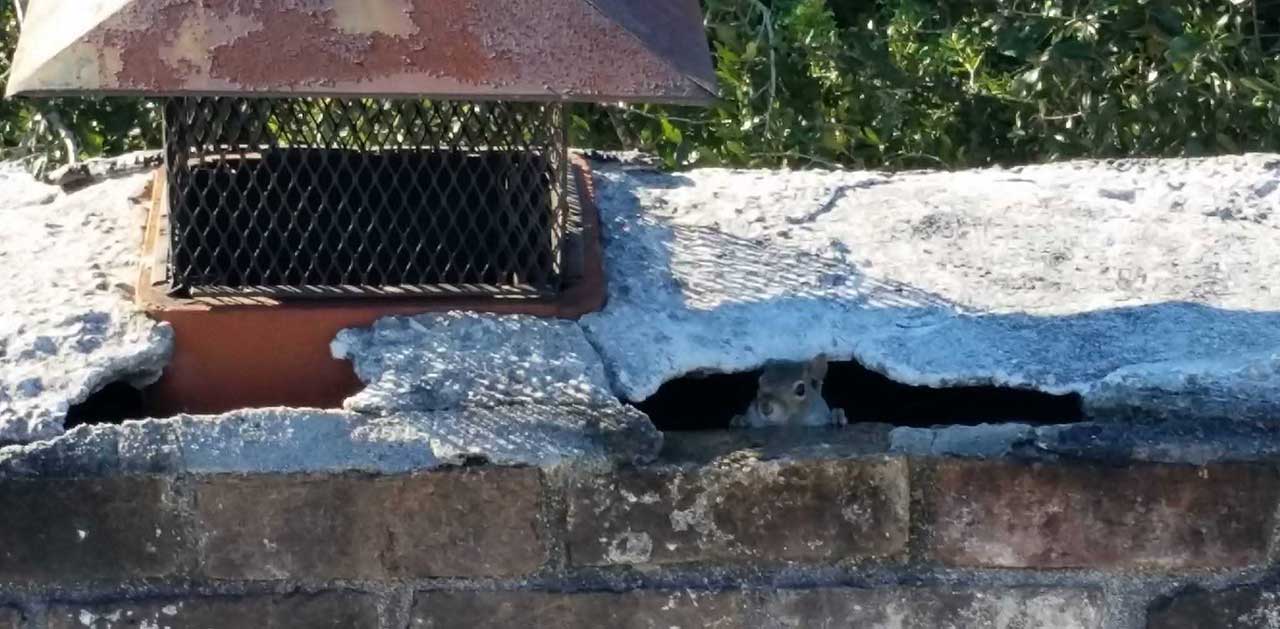
Most homeowners don’t see the animal – they hear or smell it first. The signs can range from obvious to subtle, and they tend to get worse the longer the situation goes unaddressed.
- Scratching, scurrying, or flapping sounds coming from the fireplace or walls – especially early morning or at night
- Chirping, chattering, or crying noises echoing down the flue
- A foul or unusual odor coming from the fireplace
- Colorful, metallic-looking flies near your fireplace (a sign of maggots, which means something has died inside)
- Debris, nesting material, or droppings appearing in the firebox
- Reduced airflow or draft issues when using your fireplace
- An animal actually appearing in your living space, which means it’s gotten past the damper
If you’re noticing any combination of these signs, it’s best to stop using your fireplace entirely and give us a call. Lighting a fire with an animal inside the chimney (alive or dead) creates a dangerous situation and can make things significantly worse.
Do I Need a Chimney Inspection After an Animal Has Been in My Chimney?
We certainly recommend it. An animal living in or passing through your chimney can cause more damage than most people realize, and some of that damage isn’t visible without a proper inspection.
What animals can leave behind:
- Nesting materials (leaves, twigs, insulation, debris) that create a fire hazard or block airflow
- Droppings that are acidic and can deteriorate your chimney liner over time
- Structural damage from animals clawing or scratching inside the flue
- Residual odors embedded in the chimney walls that can continue to smell even after the animal is gone
- Parasites, such as mites or fleas, that were living on the animal
Our post-removal inspection includes a visual overview (and where needed, a video camera inspection) of the full length of the flue, an assessment of the chimney liner for cracks and damage, the identification of any blockages or remaining debris, and a written report of findings and any recommended repairs
We always recommend at least a level 1 inspection after a critter removal, and in some cases – particularly if the animal was present for an extended period – a level 2 camera inspection to give you the full picture of what’s going on inside. You want to know your chimney is completely clean and safe before you use your fireplace again.
Are There Animals You Can’t Remove From a Chimney?
Get Your Free Virtual Assessment Today!
Don’t Put Off Animal Removal for Your Chimney
Animals in chimneys don’t typically find their own way out, and the longer they’re in there, the more complicated – and costly — the situation becomes. A small nesting problem in the spring can turn into a family of raccoons. A bird that got stuck can become the source of an odor that spreads through your entire home. And an uncapped chimney will keep inviting new visitors in, season after season. One call, one inspection, and one chimney cap can put an end to the whole cycle.
If your fireplace functions properly but you’re tired of the way it looks, ask our chimney services experts about a fireplace replacement or facelift.