Is your chimney leaking? We’re willing to bet that if you’ve found this blog post, you may be trying to find an answer to why there are water stains on the ceilings or walls around your chimney or why you smell mold or hear a drip-drip-drip sound coming from your chimney. A chimney leak can be caused by any number of things, but here in Houston, Lords Chimney’s certified technicians have seen it all; from our many years of leak resolution, we now know that most chimney leaks can be attributed to one of the following four issues:

All chimneys—whether they’re brick, stone, or prefab—require some type of maintenance to keep water out of them. We’re happy to advise you about which waterproofing method(s) are best for you and your home.
1. Gapping or Rusted Flashing: Flashing is the metal band that is woven around the base of your chimney where it meets your roof. In most cases it is partially embedded in your roof’s shingles—so that new flashing is often installed at the same time as a new roof. This junction point is a vulnerable one, hence the flashing is installed to give it added armor from potential leaks. However, flashing is notorious for gapping or rusting over time, especially if caulk has come loose or if the flashing was installed improperly. If we determine that faulty flashing is the cause of your leak, Lords Chimney can either repair your existing flashing or custom fit new flashing onto your chimney.
2. Inadequate Protection Up Top: A chimney without a chimney cap or a top-sealing damper is not unlike a house without a roof. In other words you’ve got a recipe for disaster, as your chimney is inviting water into your home. A chimney cap or top-sealing damper will not only keep water out but also keep animals and debris out, keep sparks in, and in the case of a chimney damper, save you money on energy bills.
3. Cracked Crown: At the very top of your chimney sits your chimney’s crown, which seals your chimney from the chimney’s flu(es) to the edge of the chimney. According to the CSIA, “The crown should provide a downward slope that will direct the water from the flue to the edge of the crown. The overhanging drip edge, by directing the run-off from the crown away from the chimney, helps prevent erosion of the brick and mortar in the chimney’s vertical surfaces.” Many chimney crowns are built with an inadequate mortar mix that too soon chips or cracks, allowing water to seep in. In many cases existing crowns can be repaired, though we sometimes determine that a crown needs to be completely rebuilt.
4. Masonry Problems: Surprisingly porous, brick and mortar—if not professionally waterproofed and maintained—can actually act as a sponge to draw water into your chimney. In addition, chimney brick can crack and spall over time, making your chimney more susceptible to leaks. If this is the case, tuckpointing or other repairs may be necessary, along with the application of a waterproofing sealant.
Lords Chimney serves the entire Greater Houston area. Having chimney problems? We hope you will call us first.
A deadly toxic gas that can enter your home if you have venting problems with your chimney or other heating unit, carbon monoxide is responsible for killing over 400 Americans by unintentional poisoning annually.
According to the Centers for Disease Control and Prevention (CDC), carbon monoxide poisoning also sends over 20,000 people to the emergency room, and more than 4,000 people end up having to be hospitalized due to carbon monoxide poisoning. This is why it’s very important to have your chimney inspected annually to ensure your chimney system is venting properly.
Our Chimney Safety Institute of America-certified technicians, who are experienced with solving carbon monoxide issues, would like to tell you more about this toxic gas that can silently enter your home and cause serious health damage…
What Is Carbon Monoxide Gas?
 Carbon monoxide is a colorless, odorless, tasteless, and extremely toxic gas that is produced by burning fuels. Carbon monoxide is often called the “silent killer” because due to its properties, it is impossible to detect without specific equipment.
Carbon monoxide is produced by the incomplete combustion of fuels, including the wood, natural gas, or propane you use to heat your home. Depending on the type of heating appliance you have, your appliance may either burn hot enough to combust all traceable levels of carbon monoxide, or it will be vented out of your home through a chimney or ventilation system. If a ventilation system becomes blocked, such as from soot, debris, or nesting animals, carbon monoxide can be forced back into your home rather than exiting through the chimney or ductwork. A malfunctioning appliance also can cause a carbon monoxide hazard.
Its many sources include burning coal, wood, charcoal, oil, natural gas, kerosene, and propane. This means that most fireplaces, stoves, grills, space heaters, water heaters, furnaces, and even vehicles produce carbon monoxide gas. However, these appliances are normally either properly vented or located outdoors so they pose little to no risk to homeowners and their families.
What Are the Symptoms of Carbon Monoxide Poisoning?
Headache, dizziness, nausea, vomiting, weakness, chest pain, and confusion are all symptoms of low-level carbon monoxide poisoning. Since these symptoms are so similar to the flu or the common cold, carbon monoxide poisoning can be difficult to diagnose.
If you believe that you are experiencing the symptoms of carbon monoxide poisoning, immediately move to a fresh air location. Ideally this is outside, but can also be next to an open door or window. Call Poison Control and local emergency services before reentering the building.
If you persist in having these symptoms, ask your doctor for a carbon monoxide level blood test. High-level symptoms include organ damage, loss of consciousness, and death.
How Does Carbon Monoxide Poisoning Happen?
For some reason, your red blood cells would rather pick up carbon monoxide than oxygen. If there is a lot of carbon monoxide in the air, your body may replace all of the oxygen in your blood with carbon monoxide, blocking oxygen from entering your body, causing tissue damage and resulting, possibly, in death. Tissues can also be destroyed by carbon monoxide teaming up with the proteins in tissues.
How Do I Prevent Carbon Monoxide Leaks From My Chimney?
 Have your fireplace and chimney cleaned and inspected by a reputable chimney company like Lords Chimney every year.
- Generators and grills should never be used indoors or in enclosed spaces such as garages or sheds.
- If you are purchasing a gas fireplace, be sure it carries the seal of a national testing group, such as the CSA Group.
- If your heat ever goes out, never use a portable flameless chemical heater indoors, and do not use your stove or oven to heat the home, either. Although they do not have a flame, they do burn gas and can cause carbon monoxide to build up inside your house.
- Do not allow cars to idle in garages, even when the garage door is open.
- Move grills away from windows and doors.
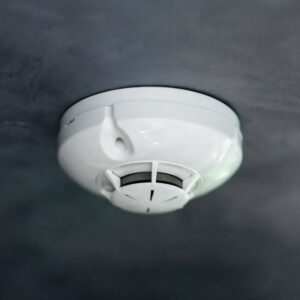
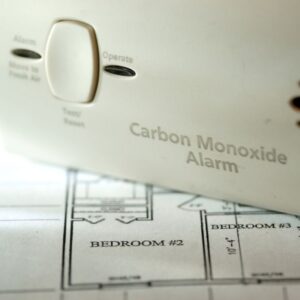
- Most importantly, install a battery-operated carbon monoxide detector in your home, and check and/or replace the batteries when you reset your clocks in the spring and fall.
How Do I Vent My Gas Appliances Properly?
Firstly, never burn anything in a fireplace that is not vented. Secondly, never patch a vent pipe with tape, gum, or anything else, which could cause carbon monoxide to build up more quickly. Thirdly, your indoor vent pipes should go up slightly as they go towards the outside. This helps prevent toxic gases from leaking if the joints or pipes are not fitted properly.
Questions? Give Us a Call
If you have any more questions about carbon monoxide, contact us today. Our experienced staff can answer whatever else you need to know about the dangers of carbon monoxide poisoning.
We know you care about keeping your family safe. One way to keep your family safe while at home is to minimize the likelihood of a deadly chimney fire. One way to minimize this risk is to make sure you do not allow creosote to accumulate.

Creosote is no laughing matter. The professionals at Lords Chimney can provide you with a wealth of information and service to give you that added peace of mind!
For homeowners with chimneys, there is one other thing that they worry about specifically – creosote. According to our team of experts here at Lords Chimney, more than 70% of the inquiries and concerns we receive from our loyal customers involve creosote in some form or fashion. So what exactly is creosote anyway?
If you look online you’ll see a lot of definitions filled with scientific jargon that would just confuse you a lot more than you may already be. But the definition from the Agency for Toxic Substances and Disease Registry describes and defines creosote in a simple and uncomplicated way. According to the ATSDR, creosote is basically the chemical byproduct of burning. There are different varieties of creosote. There’s the Wood, Coal Tar Pitch, Coal Tar Pitch Volatiles and Coal Tar. But basically they are all referred to collectively as creosote.
Why should we worry?
Although seemingly harmless during the beginning stages, creosote can quickly become extremely dangerous when left alone. You see, since it is a byproduct of burning, this means that it would constantly be produced whenever there’s burning of any kind in your chimney system. Once it is produced, it sticks to various parts of the fireplace and chimney. If it accumulates further, it becomes this thick volatile layer that is one of the number one culprits of chimney and house fires.
What can we do?
The best thing we can do to prevent things from getting out of hand is to properly maintain your chimney. Schedule regular inspections and cleanings to make sure that creosote build-up never gets a chance to reach threatening levels, which, in turn, would guarantee safety for your home and your family. So what are you waiting for? Pick up a phone and schedule an appointment right now. You can count on us for quality and dependable chimney and fireplace services. Lords Chimney is ready to help!
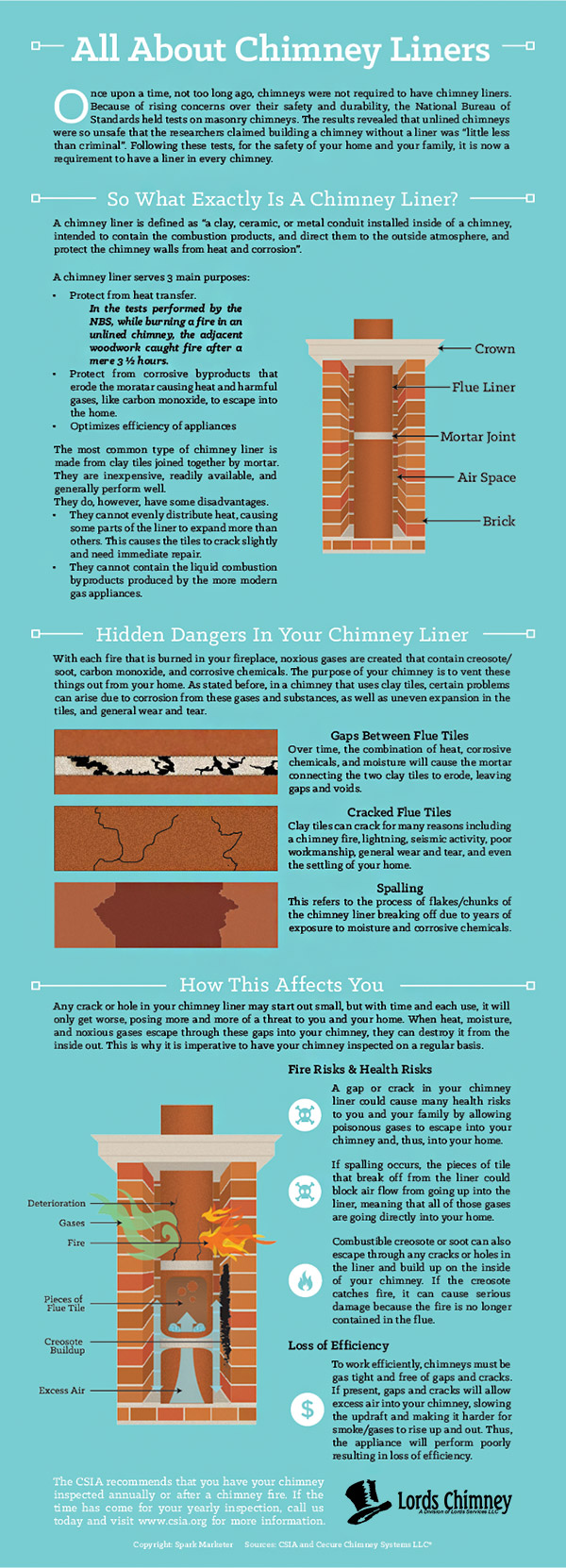
The chimney liner of a fireplace is one of the most critical components of the operating system. According to the CSIA, problems in your chimney’s flue can present serious risks to your home and family, as it is no longer able to perform its primary function: to safely contain and vent the products of combustion to the outside of your home.
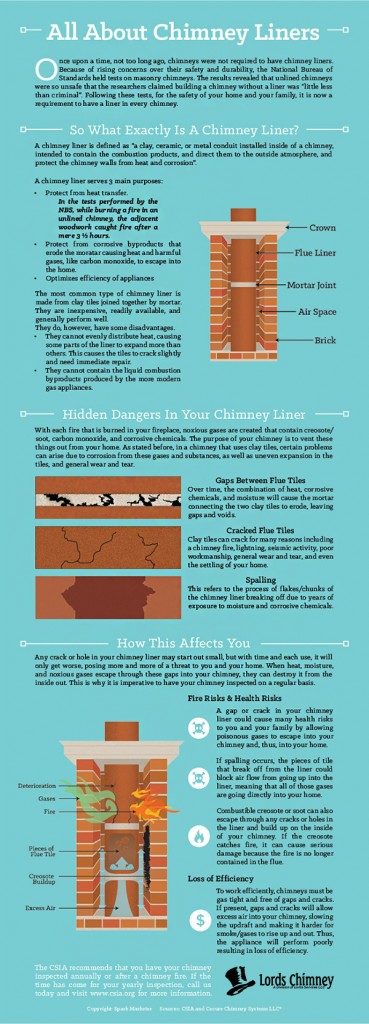
Every chimney needs a working liner to usher deadly carbon monoxide gases from your home.
Everything You Need to Know About Creosote
What is Creosote?
Creosote is a chemical byproduct that is produced after the distillation of tar. So when wood is burned, creosote is produced. It is known for its preservative properties and for being anti-septic. There are basically two types of creosote; the wood-tar, and the coal-tar. The wood-tar creosote, being less toxic, is commonly used in meat preservation, wood treatment and for medicinal purposes. When used medicinally, it is commonly utilized as an astringent, anesthetic, expectorant, laxative and anti-septic. The coal-tar creosote is more commonly used in wood preservation because of its toxic properties.
In its early stages of accumulation, creosote is flaky. As it left to build…it becomes more tar-like. All creosote is highly flammable.
Creosote in Chimney
There are several stages that the creosote in your chimney that you may experience. First is its’ soot: a flaky form that is easy to remove leaving the flue walls unobstructed. Second: the stage where it leaves brittle and hard deposits that are a bit more difficult to remove. The third is the glazed stage where it becomes dangerous and much more difficult to remove. Once you notice the dense, dark and shiny tar-like appearance, then this would indicate that the creosote has reached its glazed stage. There will always be some level of creosote in your chimney – as it is a natural byproduct of burning, but it doesn’t need to be left to accumulate.
Possible Dangers
The longer creosote is ignored…the greater the possible danger. Creosote is highly flammable and is a leading cause of chimney fires. You may see products, such as a log that is supposed to remove creosote while burning. Not only is this difficult to gauge in its effectiveness, it may also cause chunks of creosote to fall down your flue and get stuck along the way. Because of the fire risk, you should leave creosote removal to a professional.
Preventive Measures
To avoid higher risk for a catastrophe, don’t wait for your chimney to reach a disastrous level of creosote build-up. It is best to schedule regular chimney inspections and sweeping on an annual basis. This way you know you are not letting the buildup become a hazard. This also prolongs your chimney’s lifespan.
We hope that this has been helpful and sufficient in answering your questions about creosote. So now you are fully equipped with the knowledge to better protect and improve your home. If you have a chimney, make sure to have it checked regularly and make it a habit to schedule a regular inspection and sweeping by a chimney professional.
A fireplace can be a wonderful addition to any room in the house where the family might gather, providing warmth, light, and a cozy ambiance. However, a fireplace system has to be carefully maintained to make sure that they common problems that affect chimneys don’t impact the safety and beauty of your family’s favorite gathering spot. We as homeowners owe it to ourselves to remain constantly vigilant as far as the condition of any part of our homes are concerned. Like every appliance or piece of furniture we own, a chimney requires just as much attention; one could even argue that it requires more attention.
Creosote
Creosote, the byproduct of burning wood, builds up on the sides of the flue system and the firebox area. Over time, this buildup can cause blockages that result in flue fires or potentially a whole-house fire. A buildup of as little as 1/8 – 1/4” is more than enough to create a fire hazard. Regular cleaning eliminates the chance for creosote to develop on chimney surfaces.

This little critter is just one of the many things that could potentially block your chimney. Call the experts to have your chimneys cleared.
Animals
Birds, squirrels, or raccoons, among other animals, get in the chimney and cause issues inside that include smells, noises, blockage, and even fires. In addition to these concerns, the animals themselves may clog the chimney and, in some cases, could even carry diseases that could spread into your home. Chimney caps with spark arrestors are a common means to prevent animals from entering the space and nesting.
Leaves and Debris
Because of the location of your chimney, leaves and debris can build up in and around the chimney year round. These things can clog the chimney, which is far more dangerous than it sounds. If the chimney is clogged, it will keep smoke and combustible gases in the home rather than letting them out. This can lead to any number of health risks as well as an increased risk of fire.
While the firebox of the fireplace system can be easily seen and therefore monitored by the homeowner, the chimney itself commonly faces a number of troubles that are often caught only by a chimney professional. Your annual chimney inspection, sweeping and cleaning will help to ensure its safety and continued functionality for years to come. You can always come to Lords Chimney with any of your questions or needs. Our staff is always here to help.