Sealing Your Chimney With HeatShield: Why It’s Effective

Does your chimney liner need some repair work? In our Houston market, especially, mortar joints tend to get worn away quickly, leading to products of combustion – like soot and sparks – escaping into areas of your home.

If this is the case for you, HeatShield may be the answer you’re looking for. HeatShield fills those holes and seals the flue, leaving your chimney with a hole at the bottom and a hole at the top with no holes in between – just like it should.

Questions? Give us a call or reach out online today – we’re here for you.

What Is HeatShield?

We tell customers to think of their chimneys like giant straws that pull smoke straight up and out of your home. If there are gaps or holes present, smoke will escape through this on its way up and out. If you’ve ever tried drinking through a straw with holes throughout it, then you know how inefficient it can be…your chimney is no different.

HeatShield is a specialized product designed to repair and restore the integrity of chimney flues by sealing gaps, cracks, and deteriorated mortar joints in masonry chimneys. It acts as a protective barrier, preventing dangerous gases, smoke, and sparks from escaping into the home, while also helping to improve the chimney’s overall efficiency.

What does HeatShield protect against?

  • Exposure to harmful and poisonous chemicals 
  • Loss of heat production/system inefficiency
  • Risk of chimney fires

What Are the Consequences of Using an Unsealed Chimney?

Check out these potential real-life scenarios for those who ignore chimney liner damage:

  • Carbon Monoxide Poisoning: A family of symptoms associated with carbon monoxide poisoning, includes headaches, dizziness, and nausea. The cause was traced back to a cracked and unsealed chimney liner that was allowing dangerous gases to leak into the home.
  • Chimney Fires: A homeowner noticed a strong smell of smoke inside the house, which led to the discovery of a small chimney fire. The fire was caused by creosote buildup in an unsealed chimney that had not been properly maintained. The fire damaged the chimney structure and could have spread to the rest of the house.
  • Water Damage: A homeowner experienced significant water damage in their living room after heavy rain. The source was found to be an unsealed chimney that allowed water to seep into the walls, leading to mold growth, staining, wood rot, and deterioration of the home’s structure.
  • Structural Damage: A homeowner found cracks in their home’s foundation and walls. The underlying issue was traced back to an unsealed chimney that had allowed moisture to penetrate the bricks and mortar, causing them to weaken over time. This compromised the structural integrity of the home and required expensive repairs.
  • Pest Infestation: A family dealing with a sudden infestation of birds and small animals discovered that their unsealed chimney was the entry point. The chimney had gaps and cracks that provided easy access for pests, leading to nests inside the chimney and unpleasant odors throughout the house.
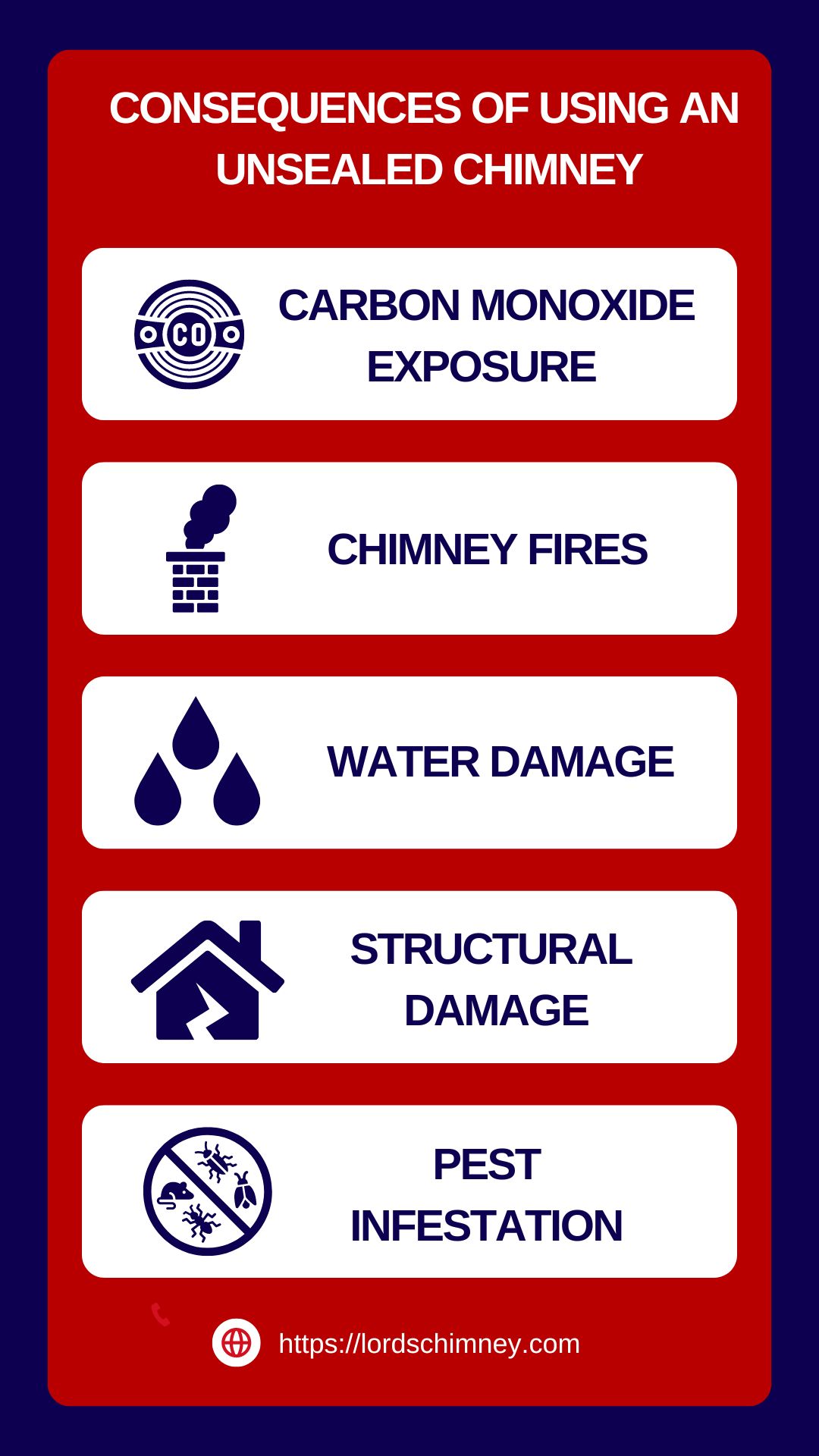
original infographic stating what can go wrong in an unlined chimney

How Do I Know if HeatShield Is Right for My Chimney?

That’s kind of the tricky part – unless told by a professional after performing a thorough inspection of your fireplace and chimney system, you wouldn’t. That’s one of the main reasons we suggest staying on top of your annual sweepings and inspections. Like so much else when it comes to chimney repairs, issues, and maintenance, it’s sometimes very hard to know what exactly you’re looking at…let alone discern what your options are for fixing or restoring it.

However, if you notice that you have a metal flue liner, you can be sure that HeatShield is not an option for you as their products only work in chimneys that are unlined or have a damaged clay tile liner.

Is HeatShield Relining a Good Long-Term Solution for Chimney Repair?

As long as you work with a certified, professional chimney service company who are applying HeatShield’s patented Cerfractory material, HeatShield is a wonderful investment for long-term chimney repairs. Because of the innovative blend of ceramic and refractory materials, HeatShield products restore your system to its optimum condition and efficiency and thus eliminate the dangers that a damaged flue liner poses by effectively sealing the cracks, gaps, and separations.

Reach Out to Lords Chimney Today

If you have questions for our team, don’t wait to reach out. We’re here and happy to have your back!

Relining Your Chimney With HeatShield

Many homeowners pay little attention to their chimney flue. As it is not easily accessible or visible, most do not pay it a second thought. Because of this, many people are shocked to learn that their flue has been cracked or damaged. Likewise, the idea of having a chimney completely relined can seem daunting to many homeowners.

Having your chimney relined with HeatShield is an excellent way to restore the integrity of your chimney flue without the construction of a full flue replacement. Before you go through the time, cost, and mess of having your flue tiles removed and replaced, consider relining your chimney with HeatShield products!

heatshield-chimney-liner-image-houston-tx-lords-chimney

What is HeatShield?

The average person has most likely never heard of HeatShield. Despite its relative lack of name recognition, it is one of the most innovative products for fireplaces and chimneys on the market today.

HeatShield is a specially formulated sealant that can withstand the high heat of the flue, preventing heat, sparks, embers, and dangerous gasses from entering the home. By coating the inside of the flue, HeatShield is able to eliminate the risks created by a cracked or damaged tile flue.

In addition to eliminating the need reline your chimney, our HeatShield products are environmentally friendly, made entirely of naturally-occurring and recycled materials. To give homeowners additional peace of mind, they also come with a 20 year limited warranty.

What HeatShield methods are available?

At Lord’s Chimney, we offer two HeatShield methods to homeowners. The first is the HeatShield joint repair system. This is ideal for homes that have tile lined flues with defective joints. Using a foam applicator that is custom fitted to your chimney, all gaps are filled with the HeatShield product and smoothed using a blade.

The HeatShield resurfacing method is ideal for homes with extensive cracking or spalling. A tie coat, or primer, is used first to remove any dust. After, a quarter-inch layer of HeatShield is applied to the entire length of the flue.

After applying either HeatShield method, a camera is used to verify that there are no remaining gaps or voids and that the chimney has been completely repaired and restored.

Benefits of a correctly lined chimney

Although it may not seem like much, a correctly installed and undamaged chimney liner can greatly impact chimney performance. The primary purpose of a chimney liner is to protect your chimney structure and the rest of your home from the extreme temperatures created by the fireplace. Likewise, chimney liners are also an essential part of stopping chimney fires from spreading to other parts of the home.

In addition, chimney liners prevent carbon monoxide and other harmful gasses from seeping back into the home. By containing and directing these byproducts of combustion out of the home, the chimney liner does more than just extend the life of your brick and mortar chimney. It also keeps your family safe!

If you have questions about how HeatShield products can be used to repair your damaged flue, contact Lord’s Chimney today!

All About the Importance of Chimney Caps

Your chimney and venting system consists of several different components to make it function safely and correctly. One of the most important parts of your chimney system, a chimney cap is needed to protect your chimney from water penetration, animal intrusion, and other things. While chimney caps are not required, we at Lords Chimney strongly recommend your chimney be capped for several essential reasons. As the cost and installation of a chimney cap is relatively inexpensive and can protect you against more expensive repair work, there is no excuse not to have a chimney cap on top of your chimney. We would like to tell you why a chimney cap is such a vitally important part of your chimney system.

Chimney-cap-importance-houston-tx-lords-chimney

A chimney cap protects the interior of your chimney from the elements.

According to EBSCO Research, a chimney cap keeps rain and melted snow from entering your chimney. If you receive a two-inch downpour of rain and have no chimney cap, you can get those two inches of rain water into your chimney. A chimney cap also protects you from wind issues. Persistent drafts can cause frustration and loss of money on heating bills. While a basic chimney cap will protect you from rain and melted snow, you can find special wind-resistant caps if you have problems with downdrafts in your chimney.

A chimney cap keeps animals from entering your chimney.

Even if you live in a climate with no snow and little rain, you still need a chimney cap to keep birds, squirrels, and raccoons out of your chimney. Many of these animals mistake chimneys for hollow trees and choose a chimney as a safe place to nest. Both the animals and their nesting can be fire hazards. The nests can cause chimney blockages and prevent toxic gases like carbon monoxide from exiting out through the chimney. This causes a risk of carbon monoxide poisoning since the gas is forced back into your home. Additionally, animals can become trapped and possibly die within your chimney, which causes a horrific odor and a possible bug infestation. To prevent these problems that come along with animal invasions. Contact Lords Chimney to install a chimney cap with metal screening on the sides to keep the animals out.

A chimney cap prevents sparks from jumping out of the chimney and igniting a fire.

We have talked about how a chimney cap is needed to keep things out of your chimney, but a cap is also important to keep hot sparks and embers inside your chimney. Occasionally, sparks and embers can fly out of your chimney and land on your roof or your neighbor’s roof, which can possibly cause a house fire. These sparks and embers may also land in your yard on a pile of leaves or a bush and cause a brush fire, which can quickly and easily become out of control. To prevent this, have a chimney cap with spark arrestors, or wire meshing, to keep the hot sparks and embers safely within your chimney.

Have more questions about chimney caps? Contact Lords Chimney to talk to our expert staff about custom installing a chimney cap on top of your chimney.